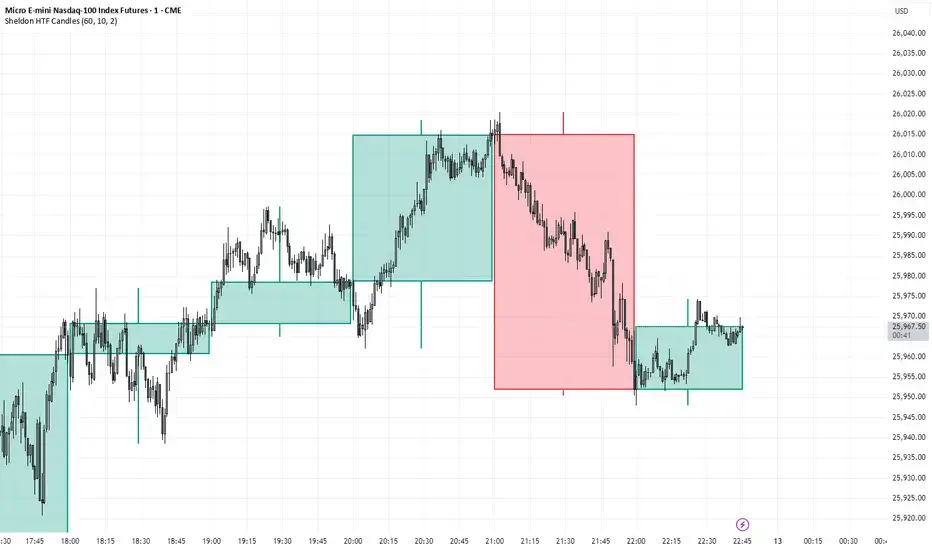
HTF Candle Reversal
Uses higher-timeframe candle behavior to anticipate reversals and a return of price to fair value.
How an HTF Candle Forms (Candle Behaviour)
A higher-timeframe (HTF) candle does not move randomly.
When a new candle starts, price usually moves one direction first, creating a wick.
After that, price often reverses, forming the candle body.
This early movement of the HTF candle gives clues about what may happen next on lower timeframes (LTF).
In a bullish trend:
- If the new HTF candle pushes down first (creates a lower wick), it often means the trend will continue upward.
- If the candle pushes up first and takes out the previous high, it may signal a reversal.
In a bearish trend:
- If the new HTF candle pushes up first, look for trend continuation downward.
- If it pushes down first and breaks the previous low, a reversal may be coming.
What is a Fair Value?
Market movement is driven by buyers and sellers who are constantly trying to agree on a fair value (a balanced price).
When price moves too far in one direction, the market becomes imbalanced.
The price often wants to return back to fair value to rebalance.
We can spot this imbalance as Fair Value Gap (FVG) forming or price just becomes overextended to one side without proper pullbacks.
The Strategy
This strategy works in any session, but it performs best during high-volume periods, such as:
- 2nd hour of the Asia session
- London Killzone
- New York Open
Steps
- Wait for a new hourly candle to open.
- Watch how the HTF candle moves.
Price will usually push in one direction first, creating the HTF wick.
Look for:- Price becoming overextended
- Imbalance / Fair Value Gap above or below
- A sweep of the previous hourly high or low
- Wait for an entry model on the LTF, such as:
- Inversion (IFVG)
- Change in state of delivery (CISD)
- Market structure shift (MSS)
- Risk management
- Stop loss: above the high or below the low
- Take profit:
- 50% of the range, or
- Targeting imbalance / fair value, or
- Fixed 1-2R risk-reward ratio (RR)
Example Trade
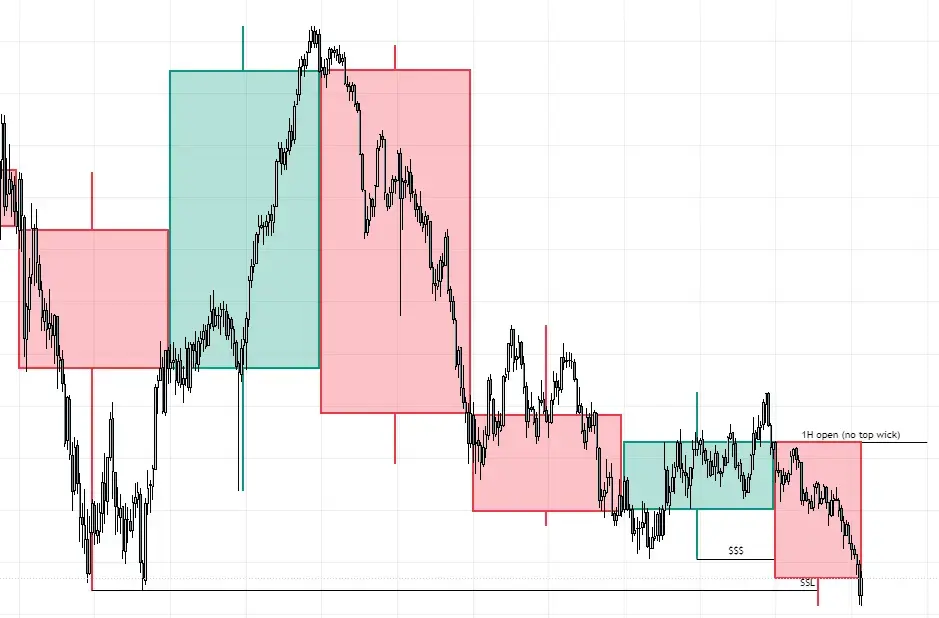
We first wait for the new hourly candle to open to sweep out the sellside liquidity.
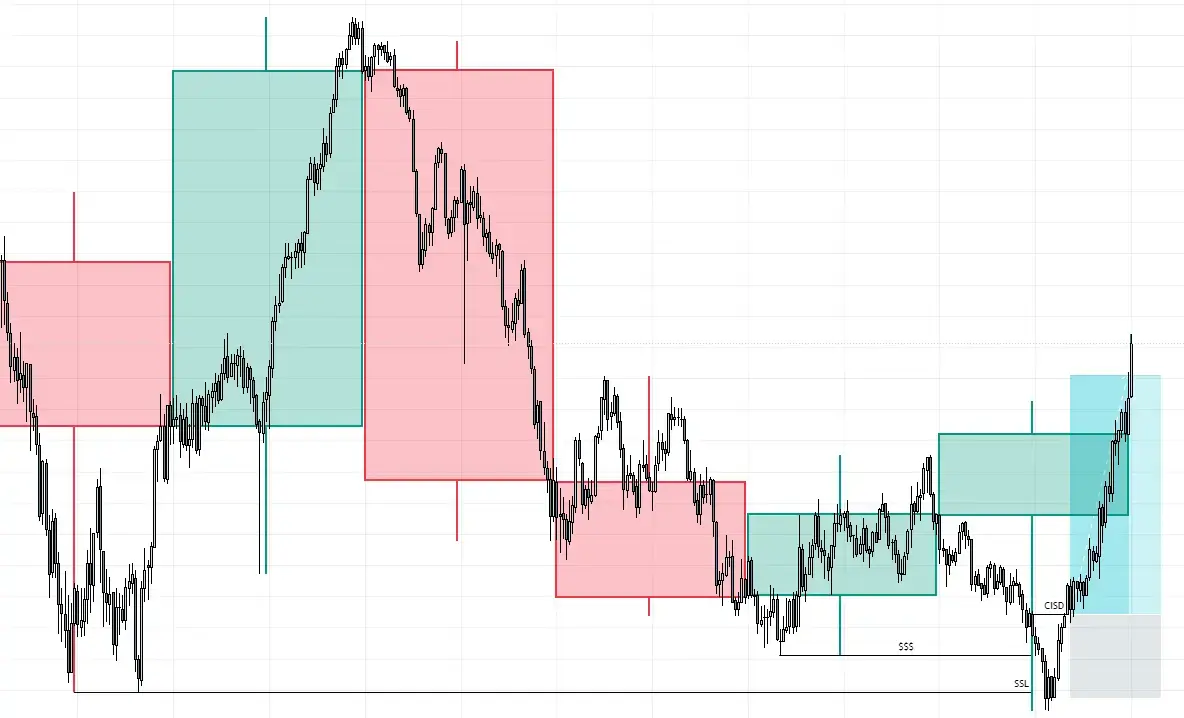
After it taken out the liquidity, we have waited for the structure to change and entered from the CISD.
Indicator
Here is the link for the TradingView indicator: Sheldon HTF Candles
This strategy was inspired by tomtrades